Scientific Justification
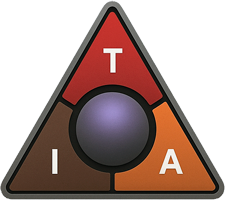
T = 1 — Minimal risk, natural avoidance C. sempervirens contains monoterpenes (α-pinene, camphene, cedrol) and tannins at concentrations not documented to cause clinical poisoning in humans. No contacts recorded at CAP-BL or EAPCCT as poisoning events. T=2 excluded: no documented reversible irritation requiring attention beyond trivial exposure. T=1 appropriate.
A = 0 — No veterinary toxicity documented No reports of animal poisoning in Cooper & Johnson, Burrows & Tyrl, or ASPCA database. Foliage consumed without documented adverse effects. A=0.
I = 0 — No invasive impact in Luxembourg C. sempervirens is cultivated ornamentally (cemeteries, parks) but does not naturalize under Luxembourg's temperate-continental climate. No documented escape or self-sustaining populations in Ferrantia 93 or GBIF Luxembourg records. I=0 by strict ecological constraint criterion.
ALL: Prevalence of cypress allergy in the general population ranges from 0.6% to 3% in Mediterranean European countries, with 9–65% of allergology outpatients sensitized to cypress pollen Institut Pasteur (Charpin et al. 2019, Clin Rev Allergy Immunol 56:174–195). Applied to the combined Mediterranean EU population (~160M), the lower bound (0.6%) yields ~960,000 sensitized individuals; Moderate (1–10M) level is the most defensible classification. Major allergens Cup s 1 and Cup s 2 are IUIS/WHO-indexed. Pop Alert Level: Moderate.
Conservation Status: NE — not evaluated in Ferrantia 93 (2025); no established wild population in Luxembourg.
https://pasteur.hal.science/pasteur-03718500/document https://onlinelibrary.wiley.com/doi/10.1111/j.1398-9995.2005.00731.x
- 💊 ALLERGEN — Major allergen affecting sensitive individuals
• Risk assessment: Risk=4.1 (T=1, EF=4.1)